
Tactical Analysis
Reading the game, applied to real context
A study of collective behaviour in the offensive, defensive and transition phases at leading European clubs. The goal: to identify patterns, understand structures and propose solutions applicable to competitive contexts.
Analysis 01
Marcelino García Toral’s Villarreal playing model
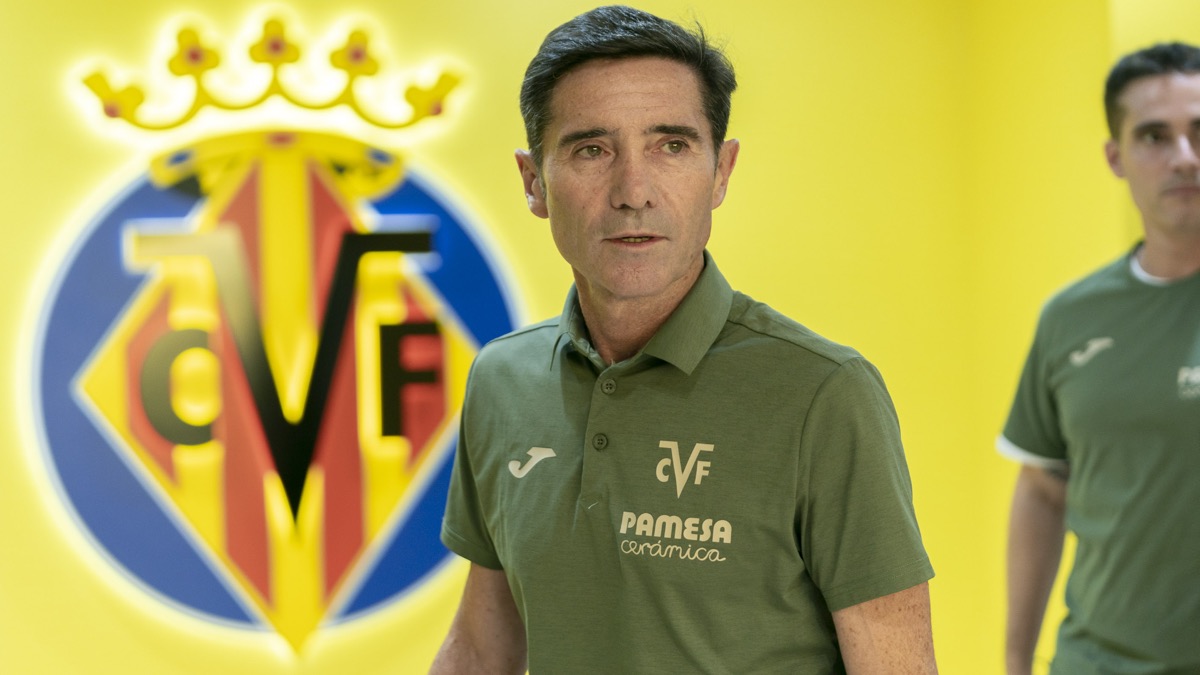
Context
Villarreal CF presents a structured playing model, built on defensive order, quick transitions and optimising space in the offensive phase.
Base system
- 4-4-2, two compact lines in the defensive phase
- Twin strikers to pin centre-backs and enable direct play
Offensive phase
The team prioritises functional build-up play, alternating short passing with direct balls to the forwards. The central midfielders play a key role in the second ball, looking for continuity after long balls. In the opposition half, the team looks for:
- Wide play
- Crosses from the flanks
- Occupying the box with two forwards
Defensive phase
Villarreal organise in a mid-block, with tight lines and good protection of the central lane.
- Quick shifting across the pitch
- Closing down interior spaces
- Solid positional defending
Transitions
One of the team’s strong points.
- After winning the ball: quick search for forwards, vertical attack, few touches
- After losing the ball: intensive recovery runs and reorganising into a mid-block
Tactical keys
- Compact structure
- Effective direct play
- Dominance of second balls
Conclusion
Marcelino García Toral’s model is characterised by its balance between defensive order and offensive verticality, being especially effective in open-game contexts and transitions.
Analysis 02
Kjetil Knutsen’s FK Bodø/Glimt build-up play

Context
FK Bodø/Glimt is one of the most recognisable teams in Europe for its offensive model, built on possession and structured progression from the start of play.
Base system
- 4-3-3
- A single pivot organising play
- Two dynamic central midfielders
- Wide-open wingers
Build-up structure
The team creates a numerical advantage in the first line through split centre-backs, a nearby pivot for support and an active goalkeeper in circulation, creating a 3+1 structure at the start.
Key behaviours
The full-backs adopt a mid-height position, providing wide passing lanes.
- Drawing opposition pressure onto the first line
- Finding the free man
- Progression through short passing
Progression and risks
- Progression through third-man interior play, switches of play and constant movement from the central midfielders
- Risk of losses in their own half and exposure in defensive transition due to reliance on technical precision
Tactical keys
- Numerical superiority in build-up
- Patience in construction
- High involvement of the pivot
Conclusion
FK Bodø/Glimt’s build-up model reflects a team with a clear identity, based on possession, rational use of space and short-passing decision-making.
Analysis 03
Hansi Flick’s FC Barcelona pressing

Context
FC Barcelona develop a structured high press aimed at winning the ball back in the opposition half and reducing the opponent’s time in possession.
Base system
- 4-3-3
- Centre-forward as the first pressing reference
- Wingers triggering pressure on the centre-backs
- Central midfielders jumping onto the opposition pivots
Pressing structure
Pressing is triggered on the opposition goalkeeper’s kick, on horizontal passes between centre-backs, and through control oriented towards the flank, looking to trap the opponent in wide areas.
- Orienting the press towards the flank
- Reducing interior passing lanes
- Coordination between lines
Defensive height and after losing the ball
One of the most important aspects of the model is the immediate reaction after losing possession.
- Advanced defensive line and compactness between lines
- Immediate activation with pressure from several players
- Recovery within a few seconds
Risks
- Space in behind the defence
- Exposure during switches of play
- Need for high collective coordination
Tactical keys
- Pressing intensity
- Collective coordination
- Fast activation after losing the ball
Conclusion
FC Barcelona’s press under Hansi Flick is built on aggression after losing the ball and efficient use of space, seeking to win the ball back in the opposition half as an offensive tool.
Analysis 04
Carlos Corberán’s Valencia CF build-up play

Tactical context
Valencia CF’s build-up play is characterised by a flexible structure that alternates short and direct play depending on the opposition’s pressing height, the match context and the profile of available players. The team looks to progress from the first phase through rational use of space, generating interior passing lanes and width advantages, though constant positional transformations appear during build-up.
Build-up structure
Build-up usually starts with split centre-backs, an involved goalkeeper and the central midfielder offering interior support; depending on context, one of the pivots may drop deep, the full-backs adjust their height, or the winger moves inside.
- The centre-backs create width, pin the opposition’s first line and look to draw pressure to activate the interior line
- The pivot offers a passing lane, provides continuity and moves constantly to escape markers and connect with the third man
- The full-backs vary their height depending on opposition pressure: one stays deep while the weak side tends to push higher for width
Key behaviours and mechanisms
- Beating the first press through quick circulation, interior support and switches of play
- Third-man mechanism: the centre-back connects with the pivot, who lays it off to a free man to beat the opposition’s first lines
- Controlled direct play when opposition pressure is high, looking for attacking references rather than forcing a short build-up
- Pinning and releasing intermediate spaces to progress through the interior and speed up the offensive transition
Difficulties observed
- Against organised high pressure, losses appear early and there’s a tendency towards direct play
- In some contexts circulation is too slow, making it difficult to draw out and beat the opposition’s press
Strengths
- Structural flexibility and adaptability
- Offensive width and active involvement of the pivot
- Effective alternation between short and direct play
Areas for improvement
- Greater aggression after beating the first line of pressure
- Speeding up circulation against high pressure
- Improving synchronisation in close support
Conclusion
Valencia CF’s build-up play is based on a flexible, adaptive structure, capable of alternating between associative construction and direct play depending on the needs of the context, prioritising offensive continuity and minimising unnecessary risk in the build-up phase.
Analysis 05
Mikel Arteta’s Arsenal FC playing model

General context
Arsenal FC present a highly structured, dominant and positional playing model, built on control of space, organised circulation, pressing after losing the ball and rational occupation. The team seeks territorial dominance and to settle in the opposition half, combining associative play, offensive aggression and emotional control of the match.
System and offensive structure
The initial structure usually starts from a flexible 1-4-3-3 or 1-4-2-3-1 that, in possession, transforms into a 1-3-2-5 or 1-2-3-5 through an inverted full-back, wide-open wingers and advanced central midfielders.
- Split centre-backs that separate the opposition’s first line and free up the interior lane
- An involved goalkeeper as extra support and facilitator of circulation
- One full-back inverts to form a double pivot and help beat the press — a key mechanism of the model
- Central midfielders with freedom to receive between the lines, attack gaps and create numerical superiority
Progression and final third
- Clean progression and quick circulation aimed at manipulating the opposition’s structure and creating positional advantages
- The wingers stay as wide as possible, create interior spaces and isolate opposition full-backs to enable individual duels
- In positional attack, the team looks for offensive overloads, box occupation and a second-line presence for close finishes
- After winning the ball, immediate acceleration and controlled verticality, especially dangerous through the wingers and central midfielders
Defensive phase
One of the strongest elements of the model is the aggressive high press, which orients the opposition’s build-up and reduces their decision time, looking to win the ball back high and maintain territorial dominance.
- Coordinated jumps and interior closing down, with immediate activation after losing the ball
- When unable to press high, falls back into an organised mid-block with compact lines to protect the central lane
- After losing the ball: immediate reaction and players gathering close to the ball to recover quickly or prevent the opposition’s counter-attack
Strengths
- Highly organised structure and great control of the match
- Ability to create numerical superiority and effective width
- Coordinated pressing and territorial dominance
Vulnerable areas
- Risk in interior losses due to offensive overloads and advanced full-backs
- Space in behind when the high press is beaten
- Dependence on tempo: if circulation loses speed, attacks become more predictable
Conclusion
Arsenal FC’s playing model is based on positional dominance, structural organisation and aggressive pressing after losing the ball. Through rational use of space and circulation designed to create advantages, the team controls the match through possession and tactical superiority, combining offensive width, structural flexibility and coordinated pressing.
Want an analysis like this of your own team or an opponent?
Bespoke tactical reports, with the same depth of game reading applied to your competitive context.